
Black Mold Remediation
Toxic Black Mold Removal &
Decontamination
Toxic black mold — mostly commonly Stachybotrys chartarum — needs a more careful approach than typical household mold. It grows on paper-backed materials like drywall after prolonged water damage and produces mycotoxins (a sticky chemical byproduct), which is why removal takes more than just wiping it down.
Why Dry Scraping Is Risky
Black mold produces mycotoxins that are bound to the spores themselves. Scraping it dry without first wetting it down releases those toxins straight into the air you're breathing — which is why professional removal always starts with a wetting agent, not a dry brush.
It's Often Worse Than It Looks
Black mold needs constant moisture to grow, and it often colonizes the backside of drywall or under flooring first. If you can see a small patch on the surface, there's usually a much larger colony hiding behind it.
How We Handle Black Mold Removal
Because black mold carries a higher health risk than typical mold, we use tighter containment controls and stronger cleaning agents throughout the whole process.
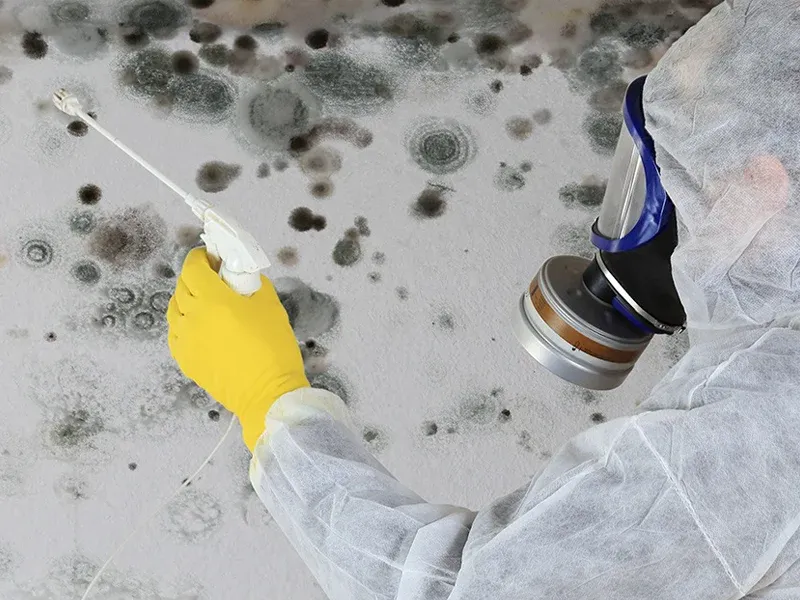
- ▪Wet Removal: We mist affected areas before cutting anything out, then bag removed materials immediately to keep spores from spreading during demolition.
- ▪Continuous Air Scrubbing: HEPA air scrubbers run inside the sealed work area the entire time, cycling the full volume of air 4 to 6 times per hour to pull particles out of circulation.
- ▪Chemical Neutralization: Mycotoxins are chemical residue, not living mold, so regular disinfectants don't break them down. We use an industrial oxidizing treatment on remaining wood to neutralize what's left behind.
Why We Recommend Clearance Testing
With black mold, a visual check isn't enough to confirm it's really gone. We recommend independent post-remediation air testing before walls get closed back up, so you have documented proof the space is clean.
How Our Mold
Remediation Process Works
Wiping down surface mold with bleach doesn't solve the problem. Our process relies on proper containment, real air scrubbing, and treating the material at the root to actually get rid of it for good.
Step 1: Find The Source
Moisture Tracking & Inspection
We use thermal imaging and moisture meters to find hidden mold growth and figure out what's feeding it — whether that's a broken pipe needing water damage restoration or foundation seepage. Fixing the moisture source is what stops the mold from coming back.
Step 2: Seal It Off
Containment Setup
To keep spores from spreading into the rest of your home, we build a sealed barrier around the work area and run HEPA air scrubbers that pull air out and trap airborne particles before they can escape.
Step 3: Remove The Mold
Material Removal & HEPA Vacuuming
Damaged drywall and insulation that can't be cleaned are removed and bagged inside the containment area. Wood framing is sanded or brushed clean, then thoroughly HEPA vacuumed to pull out remaining spores.
Step 4: Treat The Area
Antimicrobial Treatment
We treat exposed framing with EPA-registered antimicrobial products that get into the wood grain to kill off remaining mold at the root, without leaving behind harsh fumes.
Step 5: Confirm It's Gone
Sealing & Final Air Testing
Once everything's dry, treated wood gets a protective sealant to guard against future moisture. We keep our air filtration running until an independent Post-Remediation Verification (PRV) test confirms the air is clean.
Why Bleach Isn't The Answer
Regular household bleach is mostly water. On porous surfaces like wood or drywall, the water soaks in while the chlorine stays on the surface — which can actually feed the mold's root system and cause it to grow back stronger within weeks.
Mold Remediation
Across Omaha Homes & Businesses
Mold spores travel easily through shared ventilation and wall cavities, so it doesn't matter what part of town you're in. Whether it's a crawl space inspection at a house or a full containment setup for a commercial building, our crews cover the whole metro.
Omaha Proper & Suburbs
Mold testing and removal for older stone foundations in Dundee, Benson, and Midtown, historic properties near Downtown and the Old Market, out to larger basements in West Omaha, North and South Omaha, Elkhorn, Gretna, and Bennington.
Sarpy County & Western Iowa
Full humidity control, containment, and mold removal across Bellevue, Papillion, and La Vista, extending into Council Bluffs, IA for both homes and businesses.
*Buying or selling a home? Real estate mold assessments and air testing get priority scheduling.
Black Mold Removal Questions
Straight answers on identification, safety, and what real removal actually involves.
Q:Is every dark or black mold actually toxic Stachybotrys?
No. Common, non-toxic household molds like Cladosporium and Alternaria can also look black, dark green, or grey. The only way to know for sure is a lab test on a sample. That said, we treat all mold with the same level of caution and containment regardless of species, since color alone isn't a reliable way to tell them apart.
Q:Can I kill black mold by spraying bleach on it?
No. Household bleach is mostly water. On porous materials like drywall or wood, the water soaks in while the chlorine stays on the surface, which can bleach the color out but actually feeds the mold's root system underneath — often causing it to come back within weeks. Bleach also doesn't neutralize mycotoxins.
Q:Why do you need sealed containment for black mold removal?
When black mold is disturbed during removal, it releases fine particles and mycotoxins into the air. Without a sealed barrier and negative air pressure, those particles can spread through your HVAC system, doorways, and flooring gaps into the rest of your house. Containment keeps everything trapped in the work area until it's safely filtered out.
Q:What are mycotoxins, and does regular cleaning remove them?
Mycotoxins are chemical byproducts that some mold species produce. Unlike the mold itself, they're not alive, so killing the mold doesn't automatically get rid of them — they can keep irritating your lungs and skin even after the mold is dead. Removing them takes physical extraction with specific surfactants, followed by an oxidizing treatment.
Related Services
Related Reading
Stop Property Damage
Before It Escalates.
Minutes matter when water damage occurs or mold colonies root into your drywall. Contact our team right now to get an expert headed over to your location
Not an immediate emergency? Get a callback instead.
Request Online Inspection Estimate